
Cricket · Level 3: Pre-Intermediate · Sub-level 3.2
Pace Bowling
5 tests · 50 facts · updated 6 September 2026 · markdown
This sub-level teaches how a fast bowler moves the ball and builds pressure — conventional swing, the grip, seam angle and shiny side that make it curve, and when it swings; seam movement and the wobble-seam ball that deviate off the pitch; the stock weapons, the yorker, the bouncer, the slower ball and the change of length; reverse swing, the old dry ball it needs and how it behaves; and the lines, lengths and field settings a quick bowler works to.
Each test below is ten questions on Insporta. The list under a test is what the questions check: one fact per question, with the source it was written from. Read it before the test, or come back from a wrong answer.
Test 1Conventional swing
Outswing needs the seam canted towards the cordon and the polished side on the leg side, so the ball drifts away from the right-hander after pitching.
Source: ESPNcricinfo coaching glossary · recall
Swing depends on the two sides behaving differently in the air, so the team polishes one side hard and leaves the other to scuff naturally.
Source: ESPNcricinfo · recall
The ball bends most in the last part of its flight, so a fuller length gives the curve time to work and brings the stumps and the drive into play.
Source: Recognised cricket coaching material · applied
Inswing bends back in towards the pads and stumps, outswing leaves the bat towards the slips; the grip and seam angle are simply mirrored.
Source: ESPNcricinfo coaching glossary · recall
A backspinning, upright seam holds its angle through the air, which is what lets the shiny and rough sides do their work and swing the ball.
Source: Recognised cricket coaching material · applied
A ball that holds its line and then bends near the batter gives almost no time to adjust, which is why late movement takes more edges than early curve.
Source: ESPNcricinfo · recall
A full ball just outside off tempts the drive, and the late away movement then takes the outside edge through to the keeper or slips.
Source: Recognised cricket coaching material · applied
Whatever the science, a cloudy day is taken as a sign to bowl fuller and straighter and give any movement the best chance to matter.
Source: ESPNcricinfo · applied
When the air gives nothing, landing the ball on its seam can still get sideways movement off the surface, so the bowler shifts from swing to seam.
Source: Recognised cricket coaching material · applied
A full ball swinging in late gives the batter little time to bring the bat down, and a missed jab leaves the stumps or the front pad exposed.
Source: ESPNcricinfo coaching glossary · recall
Test 2Seam movement and the wobble ball
If the raised seam grips the surface at an angle, the ball kicks one way off the pitch; that is seam movement, and it needs no curve through the air.
Source: ESPNcricinfo coaching glossary · recall
A wobbling seam means the bowler cannot be sure which part of the seam will land, and neither can the batter, so the movement is unpredictable both ways.
Source: ESPNcricinfo · recall
Because even the bowler does not know which way it will go, the batter cannot line it up, so a good length with a wobbling seam builds pressure on its own.
Source: Recognised cricket coaching material · applied
Landing on the flat leather rather than the seam gives inconsistent bounce, so a cross-seam ball is used on wearing pitches or to unsettle a set batter.
Source: ESPNcricinfo coaching glossary · applied
A ball landing on the seam a fraction back of full keeps the batter reaching and unsure whether to go forward or back, and small deviation then finds the edge.
Source: Recognised cricket coaching material · applied
Seam movement does the wicket-taking on a helpful surface, so the bowler keeps it full and at the stumps and lets edges and lbws come.
Source: ESPNcricinfo · applied
A new ball has a proud seam and the surface has most moisture and grass early, and both flatten out as the day wears on, so movement fades.
Source: Recognised cricket coaching material · applied
The nearer the bat meets the ball to the body, the smaller the gap the seam movement has to work in, so edges drop shorter and misjudgements are softer.
Source: ESPNcricinfo coaching glossary · applied
Landing on an angled seam, it darts back into the right-hander, threatening the inside edge, the pad in front and leg or middle stump.
Source: ESPNcricinfo · recall
Swing can be set up by grip and angle, but seam needs the raised stitching to strike the pitch just right, which happens by degrees rather than on demand.
Source: Recognised cricket coaching material · recall
Test 3The stock deliveries
A yorker lands on or just before the popping crease, under the swing of the bat, so the batter has to dig it out rather than play a full stroke.
Source: ESPNcricinfo coaching glossary · recall
A well-directed yorker gives no room and no length to swing at, so the best a batter usually manages is a single, which is why it is the death-overs weapon.
Source: Recognised cricket coaching material · recall
A surprise bouncer hurries the batter, but a predictable one sits up to be hit, so it works best mixed in with fuller deliveries.
Source: ESPNcricinfo · applied
If the batter commits to the pace of the quicker balls, a well-disguised slower one is met too early, so the shot goes up in the air or falls short.
Source: ESPNcricinfo coaching glossary · recall
The arm comes through at full pace so the batter reads "quick", while the flipped wrist takes the speed off without an obvious change in the action.
Source: Recognised cricket coaching material · applied
Spotted early, a slower ball simply gives the batter more time and less pace to work with, which is an invitation to hit through the line.
Source: ESPNcricinfo · applied
A lower-order batter usually has less practice getting out of the way, so the short ball rushes them into a fend, a top edge or a glove behind.
Source: Recognised cricket coaching material · recall
Good length is relative to the batter and the bounce, not a fixed mark; it is wherever neither the front-foot nor the back-foot shot is comfortable.
Source: ESPNcricinfo coaching glossary · recall
A full ball angled across and away gives no pace to work with and no width to free the arms, so it is a low-risk death option even if less lethal than the straight yorker.
Source: ESPNcricinfo · applied
Varying full and short while holding a tight line makes the batter keep adjusting forward and back, and a wrong choice brings a false shot.
Source: Recognised cricket coaching material · recall
Test 4Reverse swing
Reverse needs one side heavily scuffed and the whole ball dry and worn, which is why it appears in the middle and later overs rather than with the new ball.
Source: ESPNcricinfo coaching glossary · recall
At reverse-swing pace and ball condition the airflow behaves differently, so the curve is towards the polished side, the opposite of what the batter expects.
Source: ESPNcricinfo · recall
The effect comes in above a certain pace, where the flow separates late on both sides, so express bowlers reverse the ball more readily than medium pacers.
Source: Recognised cricket coaching material · recall
On a hard, bare ground the ball scuffs up within a dozen overs, giving the contrast between a battered side and a kept side that reverse depends on.
Source: ESPNcricinfo coaching glossary · applied
Expecting the ball to hold or leave, the batter plays down the wrong line, and a full ball darting the other way sneaks under the bat onto the stumps.
Source: Recognised cricket coaching material · applied
Since reverse curves towards the shiny side, a batter who sees the shine early can pick the direction, so bowlers cover the ball in the run-up.
Source: ESPNcricinfo · applied
The Laws permit shining with sweat and hard hand-polishing but forbid any artificial roughening, so a side can only reverse if it has scuffed up on its own.
Source: ESPNcricinfo · recall
By moving early the batter changes the ball's effective length, so a would-be yorker becomes a low full toss that can be driven or flicked away.
Source: Recognised cricket coaching material · applied
Some attacks now get reverse within fifteen or twenty overs through raw speed and a rough square, blurring the old line between swing and reverse.
Source: ESPNcricinfo · recall
After a quiet middle period, late movement reappearing, especially inswing to the right-hander, tells the captain to bring the quicks back and attack the stumps.
Source: Recognised cricket coaching material · applied
Test 5Lines, lengths and fields
A ball in that channel is close enough to feel it must be played but far enough that a nibble finds the edge, so the batter is caught in two minds.
Source: ESPNcricinfo coaching glossary · recall
A plan pairs a line and length that troubles that batter with fielders placed where his likely mistake goes, so the pressure and the catcher arrive together.
Source: Recognised cricket coaching material · applied
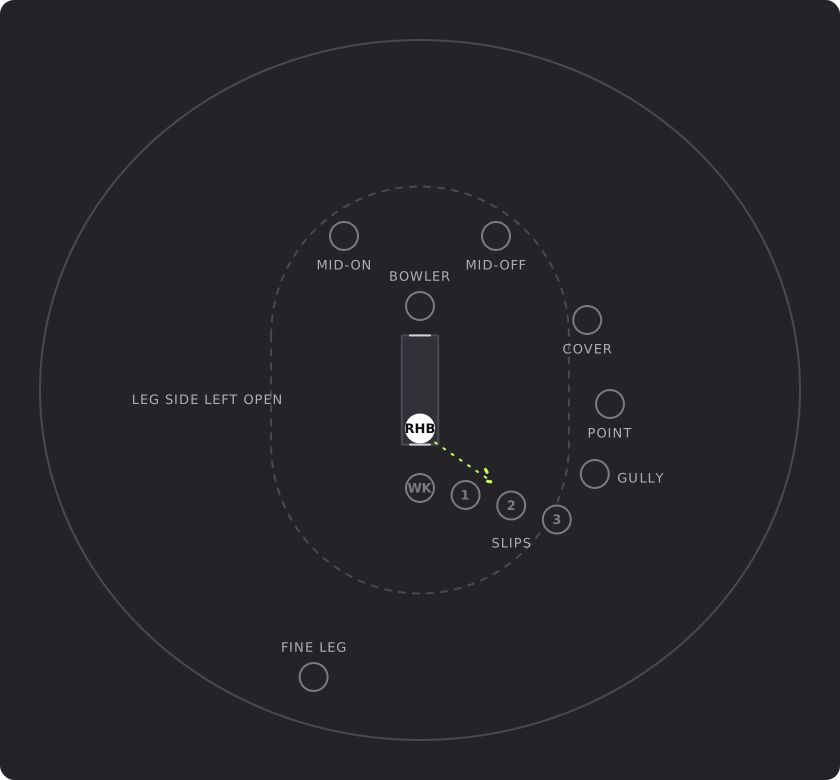
Early on, the edge is the main wicket-taking chance, so the catchers go where an outswinger's nick carries, behind the bat on the off side.
Source: ESPNcricinfo · applied
A mishooked or top-edged pull flies behind square on the leg side, so those catching and boundary positions are set before the short ball is bowled.
Source: Recognised cricket coaching material · applied
From wider on the crease the ball comes across less and can hold its line or nip back, which brings lbw and the stumps more into play, especially into the rough.
Source: ESPNcricinfo coaching glossary · recall
Starving a batter of scoring balls with a tight line and a run-saving field makes him force the pace, and the false shot follows the frustration.
Source: Recognised cricket coaching material · applied
Denying the length he thrives on forces him forward, where his footwork is less sure, and a fuller ball also brings swing, edges and lbw into it.
Source: ESPNcricinfo · applied
When a quick targets the body, a fend or a cramped flick pops just behind square on the leg side, and the leg gully sits exactly in that arc.
Source: Recognised cricket coaching material · recall
Close catchers up mean fewer runs are cut off, so it is a bet that pressure and the surface will bring an edge before the loose ball costs too much.
Source: ESPNcricinfo · applied
On a lively surface, seam and swing threaten leg, middle and off and the pad, so a straight, full line attacks bowled, lbw and both edges at once.
Source: Recognised cricket coaching material · applied
Sources
ESPNcricinfo and its coaching glossary for technique and tactics; recognised cricket coaching material for stroke play, bowling actions and field settings; general cricket knowledge for match situations. Level 3 is skills and judgement, not the Laws, so the MCC code is cited only where a Law underpins a tactical point. Questions are authored from these sources, not reproduced from them.
- Recognised cricket coaching material21
- ESPNcricinfo16
- ESPNcricinfo coaching glossary13