
Triathlon · Level 1: Beginner · Sub-level 1.2
Open Water Swimming
10 tests · 100 facts · updated 6 September 2026 · markdown
Everything the pool does not teach: sighting, drafting, wetsuits, cold water, entries and exits, and keeping your head when it gets rough.
Each test below is ten questions on Insporta. The list under a test is what the questions check: one fact per question, with the source it was written from. Read it before the test, or come back from a wrong answer.
Test 1Sighting and Navigation
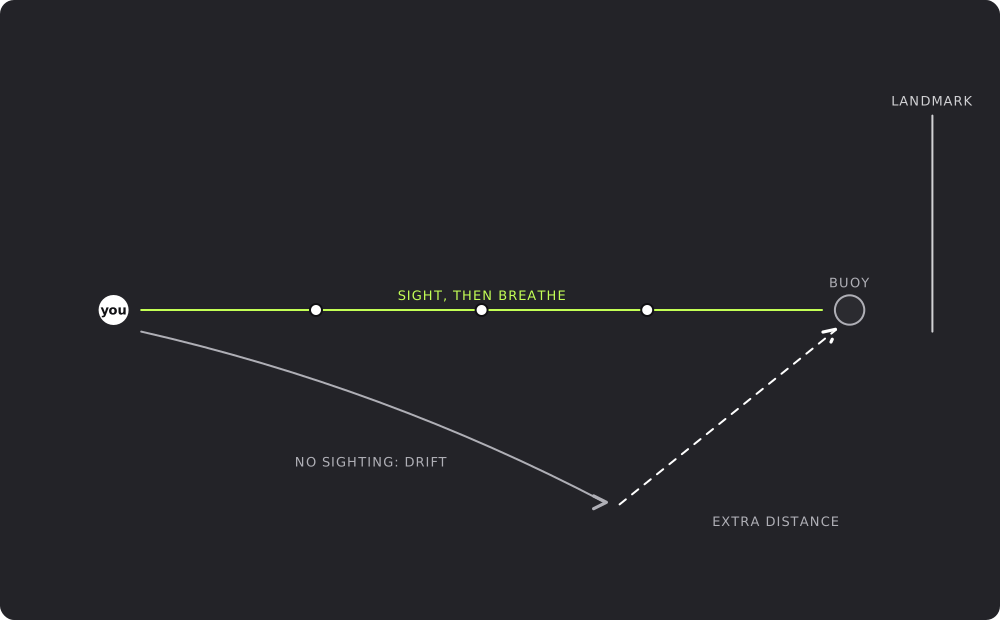
Lifting the head high drops the hips and legs, adding drag and wrecking body position. Sighting should be a small, quick eye-lift, not a push-up.
Source: World Triathlon / general reference
Sighting forward then rolling into the normal side breath uses one head movement instead of two, so rhythm and body position are barely disturbed.
Source: World Triathlon / general reference
In chop each glance shows less, so you need more of them, and timing the lift to the top of a swell is what actually buys you a view.
Source: World Triathlon / general reference
A buoy is small and low to the water; a building, tree or mast behind it stays visible and gives you the same heading.
Source: World Triathlon / general reference
Navigation error is paid for in distance. A small heading error repeated over hundreds of metres can add a meaningful amount of extra swimming.
Source: World Triathlon / general reference
Tinted or mirrored lenses cut glare, and a shoreline feature to the side of the sun gives you a usable heading when the buoy is unreadable.
Source: World Triathlon / general reference
A fixed count, adjusted for conditions, stops both over-sighting and long blind stretches, and it keeps the stroke rhythmic.
Source: World Triathlon / general reference
One-sided breathing tends to build an asymmetric pull, which curves the swim. Breathing both sides evens the stroke out.
Source: World Triathlon / general reference
You leave a turn pointing wherever the turn left you, so an early sight is what stops a small turning error becoming a long diagonal.
Source: World Triathlon / general reference
A bubble trail is a convenient line to hold in poor visibility, but it inherits the lead swimmer's navigation errors, so you still verify the course yourself.
Source: World Triathlon / general reference
Test 2Drafting and Pack Swimming
The useful shelter is in the wake right behind the feet, or in the pressure pocket beside the hip. Further forward or further back there is little to gain.
Source: World Triathlon / general reference
Drafting works by lowering drag: you hold the same speed for a lower energy cost. The gain is hydrodynamic, not motivational.
Source: World Triathlon / general reference
The draft falls away quickly with distance, and surging costs more than the draft returns, so a steady matched tempo close behind is what keeps it.
Source: World Triathlon / general reference
A little faster than your solo pace is a free gain you can hold. Too fast and you blow up; too slow and you have paid for a draft that costs you time.
Source: World Triathlon / general reference
There is no time limit or buoy exclusion on swim drafting. You leave when the free ride starts costing you speed.
Source: World Triathlon / general reference
Incidental contact is normal in a mass swim. Staying relaxed keeps your breathing under control, and moving a metre sideways solves most of it.
Source: World Triathlon / general reference
Being swum over lasts a second or two; panic costs far more than the contact. Exhaling and letting them go past gets you back into rhythm quickly.
Source: World Triathlon / general reference
Repeated foot contact annoys the leader and disrupts you both. A small gap adjustment, or moving to the hip, keeps the draft without the touching.
Source: World Triathlon / general reference
Being able to breathe on either side lets you take air on the calmer side, which is one of the practical reasons to train bilateral breathing.
Source: World Triathlon / general reference
Following feet blindly can add hundreds of metres if the leader navigates badly. The energy you save is easily outweighed by distance you did not need to swim.
Source: World Triathlon / general reference
Test 3Wetsuits in Practice
A correct suit is close-fitting all over; gaps at the lower back or armpits scoop water and drag. It should feel tight out of the water and free once you are swimming.
Source: World Triathlon / general reference
Neoprene tears easily under a fingernail or a single hard yank. Small, patient adjustments with flat fingers spread the load and get a better fit.
Source: World Triathlon / general reference
The bag removes friction at the narrowest part of the suit, which is where most cuff tears and time-wasting struggles happen.
Source: World Triathlon / general reference
Petroleum-based products degrade neoprene, so use a purpose-made lube. Neck, wrists and ankles are the rub points and the places you need the suit to slide off fast.
Source: World Triathlon / general reference
Thicker neoprene floats more but restricts movement, so suits trade thickness for flexibility where the stroke happens and keep the lift low down, where the legs sink.
Source: World Triathlon / general reference
Both rulebooks cap wetsuit neoprene at 5 mm, which limits how much buoyancy a suit can legally provide.
Source: World Triathlon Competition Rules / Ironman Athlete Rules
Removing the sleeves removes both restriction and neoprene, so you gain stroke freedom and lose some flotation and insulation. Both styles are legal.
Source: World Triathlon / general reference
Stripping to the waist on the move turns removal into part of the run to transition, and standing on the cuffs pulls the ankles through without bending down.
Source: World Triathlon / general reference
A wetsuit changes your body position and loads the shoulders differently. Race morning is the wrong moment to discover either that, or a seam that rubs raw.
Source: World Triathlon / general reference
UV and salt degrade neoprene, and a thin hanger stretches and creases the shoulders permanently. Rinse, shade-dry and store it flat or on a broad hanger.
Source: World Triathlon / general reference
Test 4Cold Water and Safety
Cold shock is a breathing and heart-rate reflex triggered by rapid skin cooling; it peaks in the first half-minute and settles within a couple of minutes if you stay calm.
Source: World Triathlon / general reference
The face and neck are highly cold-sensitive, so wetting them first blunts the gasp reflex. Avoiding the cold until the gun leaves the reflex to hit you mid-race.
Source: World Triathlon / general reference
A few minutes in the water lets the gasp and hyperventilation pass before the gun. A warm-up cannot meaningfully raise core temperature in cold water.
Source: World Triathlon / general reference
Loss of fine motor control, clumsiness and slurred speech alongside heavy shivering point to falling core temperature and need immediate warming.
Source: World Triathlon / general reference
The danger is not that solo swimming changes your physiology, but that a cramp, panic spike or equipment problem has no witness and no rescuer.
Source: World Triathlon / general reference
A single raised, still arm is the standard distress signal and is far easier for lookouts to spot than movement in a field of swimmers. Note that once official assistance is given the rules require you to retire, so signalling for help is not the same as resting on a buoy.
Source: World Triathlon / general reference
Resting on a boat or buoy is permitted as long as it gives no advantage; being towed forward is not. Knowing this removes the fear of stopping.
Source: World Triathlon / general reference
A tow float is a visibility device and a rest aid, not a lifejacket. It will not support or turn an unresponsive swimmer.
Source: World Triathlon / general reference
Floating on the back removes the fight for air and buys the time needed for breathing and heart rate to come back under control.
Source: World Triathlon / general reference
Heavy rain carries agricultural and sewer runoff into open water, so water quality drops. Swallowing as little water as possible always reduces the risk.
Source: World Triathlon / general reference
Test 5Entries, Exits and Turns
Each dive turns a push off the bottom into forward glide, and going under avoids the resistance of oncoming waves. Run with high knees while you still can, and switch to diving once the water is too deep to run.
Source: World Triathlon / general reference
You may be waiting a minute or more, so the goal is to burn as little energy as possible and let your breathing settle before the horn.
Source: World Triathlon / general reference
Diving into water of unknown depth is the single biggest injury risk at a pontoon start. Follow the organiser's briefing on how to enter.
Source: World Triathlon / general reference
Water resists anything dragged through it, so lifting the feet clear costs less than ploughing them forward at shin depth.
Source: World Triathlon / general reference
The tight line is the shortest but also the most crowded. For an inexperienced swimmer, a few extra metres is cheaper than losing composure in the scrum.
Source: World Triathlon / general reference
The roll onto the back turns the body around the buoy without stopping, and the upward-facing moment makes it easy to pick up the next marker.
Source: World Triathlon / general reference
Wading through deep water is slow and heavy. Swimming until your hand touches the bottom is the standard way to time the exit.
Source: World Triathlon / general reference
You usually hear a following wave before you see it: rising splash and swimmers appearing in your breathing window. Holding your line lets them flow past, while sprinting or cutting across a moving group costs energy and puts you into the contact instead of out of it.
Source: World Triathlon / general reference
Wet ramps and steps are a classic slip hazard, and dizziness on exit makes it worse. Balance first, speed after.
Source: World Triathlon / general reference
Goggles and cap come off first so the suit can clear the head, then the arms come out on the move. Only the legs need removing at the bike.
Source: World Triathlon / general reference
Test 6Breathing and Composure
A cramping calf releases when the muscle is lengthened, so the toes come towards the shin; pointing them shortens it and makes it worse. Swim on gently on the arms, and if it keeps returning or you cannot swim comfortably, signal a safety craft and take the help.
Source: World Triathlon / general reference
Turning to breathe into oncoming chop means taking in water. The leeward side sits in the trough of your own bow wave and stays clearer.
Source: World Triathlon / general reference
Holding air leaves you having to exhale and inhale in one short head turn, and lets carbon dioxide build up, which feels like breathlessness.
Source: World Triathlon / general reference
Losing goggles is an inconvenience, not an emergency; a few calm seconds fixes it. Wearing the straps under your cap makes it much less likely.
Source: World Triathlon / general reference
A panic spike is over-breathing, not lack of oxygen. Lengthening the exhale restores the balance; more fast breaths make it worse.
Source: World Triathlon / general reference
A tight collar, cold water and race nerves together make breathing feel restricted, and thirty seconds on your back easing the collar usually fixes it. If the breathing does not settle, raise an arm and signal the nearest safety craft instead of pressing on.
Source: World Triathlon / general reference
The face is densely supplied with cold receptors, so immersing it produces a strong reflex response. Repeated exposure before the start blunts it.
Source: World Triathlon / general reference
The opening minutes combine adrenaline, cold and crowding, so effort feels much easier than it is. Controlled pacing keeps breathing under control.
Source: World Triathlon / general reference
Coughing needs air, and front crawl does not give you enough of it. A few easy strokes on your back or on breaststroke clears it in seconds; sprinting or breath-holding makes it worse.
Source: World Triathlon / general reference
Contact is normal and usually unintentional. Keeping your rhythm and drifting sideways solves it without wasting energy or breaking the rules.
Source: World Triathlon / general reference
Test 7Currents, Chop and Conditions
In a cross-current you must offset your heading up-current, so the drift over the whole leg delivers you to the buoy. Correcting only at the end costs far more distance.
Source: General open-water reference
Weed grips harder the more you thrash, and standing up is the real hazard: the bottom is soft and uneven and the weed wraps round your legs while you are upright. If you do get caught, stay calm, roll onto your back and free it slowly, and signal a safety craft if you cannot.
Source: World Triathlon / general reference
Buoys can drag on their moorings in wind or current, and organisers may reposition them. The course is whatever is marked on the day, and you must still round every buoy correctly.
Source: General open-water reference
A long glide lets chop stall you between strokes, and a low recovery catches waves. A shorter, higher-turnover stroke keeps you moving through rough water.
Source: General open-water reference
River current is fastest in the deep central channel and slowest near the banks, where friction slows the water. Going upstream, hug the bank if it is safe to do so.
Source: General open-water reference
Tidal streams run hardest around mid-tide and ease to slack water near the turn. Event organisers often time sea swims for slack water for exactly this reason.
Source: General open-water reference
A moored buoy leans downstream and drags a small wake, and swimmers already in the water drift the same way, which is the clearest read you get from the bank. Knowing the direction before the gun lets you pick which side of the course to start on rather than discovering the drift at the first buoy.
Source: World Triathlon / general reference
With no visual reference in the water, an external fixed landmark is your only reliable guide. Following another swimmer just copies their errors.
Source: General open-water reference
The extra density of salt water raises your body position a little, which usually feels easier, but it also irritates the throat and stomach if you take it in. Breathe on the sheltered side and swallow as little as possible; sea water is not a sodium drink.
Source: World Triathlon / general reference
Fighting bad conditions to chase a time raises the risk of panic and wrecks the bike leg. Everyone is slower, so effort, not the clock, is the right guide.
Source: General open-water reference
Test 8Swim Training for Open Water
Sighting has to blend into your existing stroke, which only happens if you rehearse it at realistic intervals during ordinary swimming.
Source: General open-water reference
Almost everyone drifts to one side, and knowing your bias tells you which way to expect to wander in open water.
Source: General open-water reference
Walls, push-offs and rest between reps all disappear on race day. Continuous swims train the specific ability to keep going without them.
Source: General open-water reference
Long reps with minimal rest and no push-off glide come closest to the continuous, self-supported effort of an open-water swim.
Source: General open-water reference
Unlike the bike leg in non-drafting racing, swim drafting is allowed and saves energy. Staying in the bubbles and sighting past the swimmer ahead is a learned skill.
Source: World Triathlon / general open-water reference
Pace judgement is trained, not guessed. Regular reps at intended race effort teach you what it feels like before you meet it on race day.
Source: General open-water reference
The beeper cues each hand entry at a fixed rate. It is useful for open water, where a slightly higher stroke rate suits chop and wetsuit buoyancy.
Source: General open-water reference
Easing in lets you cope with cold and reduced visibility, and staying parallel to the shore keeps you in reach of help throughout.
Source: General open-water reference
Cold, murky water and a wetsuit all change how you swim, and it takes repeated exposure to stop being a surprise. One session is not enough, and abandoning the pool costs you technique work.
Source: General open-water reference
A mass start means contact and a fast opening, then a drop into rhythm. Rehearsing both parts with other swimmers is what makes it manageable.
Source: General open-water reference
Test 9Goggles, Caps and Small Kit
If the gaskets seal by suction alone, the shape suits your face. The strap only holds the goggles in place, it should not be creating the seal.
Source: General open-water reference
The factory anti-fog layer is fragile and rubs off easily, which is why fogging usually starts after a few wipes. Heat and sunlight also damage lenses and gaskets.
Source: General open-water reference
Dark lenses cut light you need in the gloom, and in low light a clear or lightly smoked lens shows the course far better.
Source: General open-water reference
Goggle failure before the gun is common and cheap to insure against. Once you are swimming, nothing can be handed to you.
Source: General open-water reference
A lot of heat is lost through the head, and doubling up helps. The colour-coded event cap must remain on top so safety crews can still identify your wave.
Source: General open-water reference
Covered straps cannot be caught by another swimmer's arm, and if the goggles are knocked they usually stay trapped under the cap rather than sinking.
Source: General open-water reference
Cold water on the eardrum can trigger vertigo and, over time, irritate the ear canal. Earplugs are personal kit, so try them in training before racing in them.
Source: General open-water reference
A swim skin is a textile suit for races above the wetsuit-legal temperature: it cuts drag slightly but adds no buoyancy or warmth. The temperature bands and whether skins are allowed at all differ by governing body and event, so the athlete guide is the authority.
Source: World Triathlon competition rules / general triathlon reference
Prescription open-water goggles and contacts under goggles both work; contacts can be washed out if the goggles flood, so carry a spare set of whichever you choose. Glasses cannot seal under goggles, and magnification through goggles does nothing for a buoy above the surface.
Source: World Triathlon / general reference
Devices that aid propulsion, such as paddles, fins or webbed gloves, are prohibited. Wetsuits within temperature limits, extra caps, earplugs and nose clips are all permitted.
Source: World Triathlon Competition Rules
Test 10From Water to T1
The run-in is dead time otherwise, so cap, goggles, zip and arms all come off while moving. The rules let you undo the suit to the waist on the way in; only full removal has to wait for the designated area or your transition spot.
Source: General open-water reference
Riding inside transition is not permitted, so the bike is wheeled with one hand on the bars or saddle. Keeping it on your outside and steering it straight stops the front wheel wandering into racks and into other athletes in a crowded aisle.
Source: World Triathlon competition rules / general triathlon reference
Strippers are volunteers who yank the suit clear once you are down on the ground with it already at the waist. Where offered, using them is entirely legal.
Source: Ironman event practice
Discarding kit outside the designated area can be penalised as littering, and your own goggles are easily lost. Everything comes off the course with you.
Source: General open-water reference
A long run-in is a chance to settle your heart rate and start the wetsuit while moving. Sprinting it straight out of the water costs you on the bike.
Source: General open-water reference
Going from horizontal to upright after a swim can drop blood pressure briefly. A stronger kick into the exit gets blood moving in the legs first.
Source: General open-water reference
Neighbouring bikes may already be gone, and personal markers on the racking are usually prohibited. Counting from a fixed entry point always works.
Source: General open-water reference
The helmet must be fastened from the moment you take the bike off the rack until after you have racked it again at the end of the bike leg. It is one of the most common disqualifications in beginner racing.
Source: World Triathlon / Ironman rules
Trapped grit causes blisters and hot spots that carry through to the run. Grass just swaps sand for cuttings and more debris.
Source: General open-water reference
Running through helmet, glasses, shoes and exit while still swimming makes the transition automatic. Chasing a lost split usually leads to riding too hard.
Source: General open-water reference
Sources
World Triathlon Competition Rules / Ironman competition rules / general coaching reference
- World Triathlon / general reference63
- General open-water reference30
- World Triathlon competition rules / general triathlon reference2
- World Triathlon Competition Rules / Ironman Athlete Rules1
- World Triathlon / general open-water reference1
- World Triathlon Competition Rules1
- Ironman event practice1
- World Triathlon / Ironman rules1